EcoFlow DELTA 2 vs Anker SOLIX C1000
EcoFlow DELTA 2 (1,024 Wh, 1,800 W) vs Anker SOLIX C1000 (1,056 Wh, 1,800 W). Their batteries are about the same size, so the differences are in output, charging and features. Here is where each one comes out ahead, based on the manufacturers' published specs.
Each row has its own scale, and the longer bar fills the row. Figures are the manufacturers' published specs.
Choose the C1000 for…
- UPS use: 20 ms switchover vs 30 ms
- faster solar charging: up to 600 W vs 500 W of panels
We may earn a commission if you buy through these links. It never changes our numbers, and every model in our database is included whether or not it pays us. Learn more.
Our verdict
This is about as close as two power stations get. Both are LiFePO4, both just over 1 kWh (1,024 Wh against 1,056 Wh), both 1,800 W continuous with six AC outlets and a 5-year warranty. Our calculator puts them within half an hour of each other on a typical fridge, at about 15 hours.
The DELTA 2 has the stronger surge, 2,700 W against 2,400 W, and more room to grow: up to 3,000 Wh with an extra battery, against 2,112 Wh for the C1000. It's also a bit lighter at 27 lb against 28.4 lb.
The C1000 switches over faster (20 ms against 30 ms), takes more solar (600 W against 500 W) and charges from the wall at up to 1,300 W against 1,200 W.
The deciding factor is probably availability, not specs. EcoFlow has stopped selling the DELTA 2 in its US store, while Anker still sells the C1000. If both are in front of you new, take the DELTA 2 for surge and expansion, or the C1000 for solar and the quicker switchover. If not, the C1000 is the one you can actually buy and get support for.
How we compared: the makers' published specs plus our runtime calculations. We haven't bench-tested these units ourselves.
See them in action
Official videos from each maker, so expect a sales pitch. They load from YouTube only when you press play.
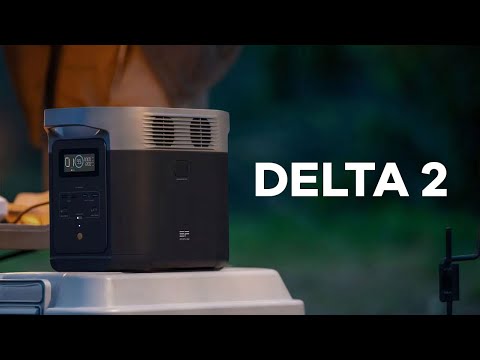 Play the EcoFlow DELTA 2 video: Introducing EcoFlow DELTA 2 | Not Just a Battery
Specs side by side
✓ marks the better figure where higher or lower is clearly better. Cycle-life claims use different end-of-life definitions (70% or 80% capacity), so we don't rank them.
| Spec | EcoFlow DELTA 2 Older | Anker SOLIX C1000 |
|---|---|---|
| Capacity | 1,024 Wh | 1,056 Wh |
| Continuous output | 1,800 W | 1,800 W |
| Surge output | 2,700 W | 2,400 W |
| Max solar input | 500 W | 600 W |
| Max AC charging power | 1,200 W | 1,300 W |
| Weight | 27 lb | 28.4 lb |
| Wh per pound | 37.9 | 37.1 |
| Expandable | Up to 3,000 Wh | Up to 2,112 Wh |
| 240 V output | No | No |
| UPS / EPS switchover | 30 ms | 20 ms |
| AC outlets | 6 | 6 |
| Battery chemistry | LiFePO4 | LiFePO4 |
| Cycle life (maker claim) | 4,000 to 80% | 3,000 to 80% |
| Warranty | 5 years | 5 years |
| Buy | Check price on Amazon | Check price on Amazon |
How long each one runs everyday devices
Nonstop runtime for one device at a time, at typical average wattage with 85% inverter efficiency. ✓ marks the longest.
| Spec | EcoFlow DELTA 2 Older | Anker SOLIX C1000 |
|---|---|---|
| Phone charging · 10 W avg | 3.8 days | 4 days |
| Wi-Fi router + modem · 15 W avg | 2.4 days | 2.5 days |
| CPAP · 30 W avg | 29 hours | 30 hours |
| Laptop · 50 W avg | 17 hours | 18 hours |
| TV · 100 W avg | 8.7 hours | 9 hours |
| Starlink Standard · 90 W avg | 9.7 hours | 10 hours |
| Refrigerator · 58 W avg | 15 hours | 15 hours |
| Chest freezer · 29 W avg | 30 hours | 31 hours |
| Window AC · 225 W avg | 3.9 hours | 4 hours |
| Sump pump · 210 W avg | 4.1 hours | 4.3 hours |
| Microwave · 1,500 W avg | 35 min | 36 min |
| Space heater · 750 W avg | 1.2 hours | 1.2 hours |
Specs from EcoFlow, Jackery, BLUETTI, Anker, DJI and Goal Zero documents, as of September 2026. See each model's page for sources: EcoFlow DELTA 2 · Anker SOLIX C1000.
Related comparisons
Tools
Runtime calculator
How long will your power station run a fridge, CPAP, sump pump or anything else? Checks surge too.
What size do I need?
List what you want to power and for how long. Get the models that can handle it, smallest first.
Solar charging calculator
Charging time from your panels, plus a wiring check for voltage and current limits.
Real-world runtime simulator
Spec-sheet math vs a simulation that adds inverter idle draw and cold weather. Simulated, not tested.
Winter outage simulator
How long a power station keeps a gas furnace running at your outdoor temperature and thermostat. Simulated, not tested.
Generator vs power station
What each costs over the years in price, gas or electricity and upkeep, and what each needs for a long outage.